

Prasad, S;
Sileo, FG;
Binder, J;
Brunelli, E;
Chianchiano, N;
Coutinho, CM;
D'Antonio, F;
Döbert, M;
Fichera, A;
Gielchinsky, Y;
et al.
Prasad, S; Sileo, FG; Binder, J; Brunelli, E; Chianchiano, N; Coutinho, CM; D'Antonio, F; Döbert, M; Fichera, A; Gielchinsky, Y; Hecher, K; Iacovella, C; Malone, S; Martinez‐Varea, A; Nørgaard, LN; Rodo, C; Simões, T; Slaghekke, F; Yinon, Y; Khalil, A
(2026)
Prediction of survival after fetoscopic laser surgery for early‐onset twin‐to‐twin transfusion syndrome.
Ultrasound in Obstetrics & Gynecology.
ISSN 0960-7692
https://doi.org/10.1002/uog.70178
SGUL Authors: Khalil, Asma
![[img]](https://openaccess.sgul.ac.uk/style/images/fileicons/application_pdf.png) |
PDF
Published Version
Available under License Creative Commons Attribution. Download (340kB) |
|
![[img]](https://openaccess.sgul.ac.uk/style/images/fileicons/application_vnd.openxmlformats-officedocument.wordprocessingml.document.png) |
Microsoft Word (.docx) (Tables S1-S2)
Supporting information
Download (18kB) |
|
![[img]](https://openaccess.sgul.ac.uk/id/eprint/118397/3/uog70178-sup-0001-figures1.png)
|
Image (PNG) (Figure S1)
Supporting information
Download (29kB) | Preview |
|
![[img]](https://openaccess.sgul.ac.uk/id/eprint/118397/4/uog70178-sup-0002-figures2.png)
|
Image (PNG) (Figure S2)
Supporting information
Download (83kB) | Preview |
Abstract
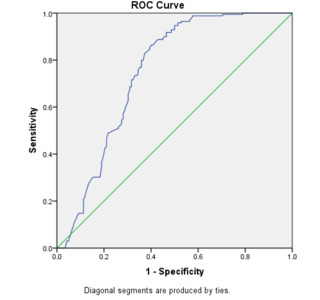
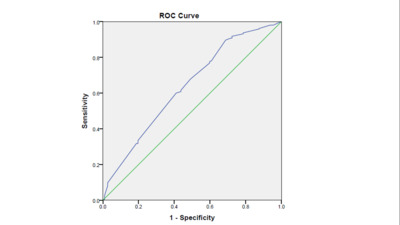
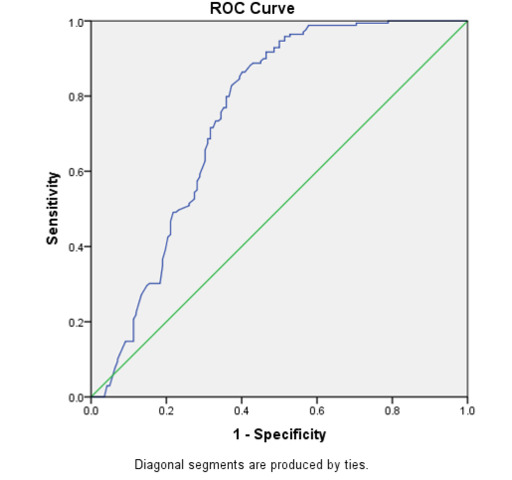
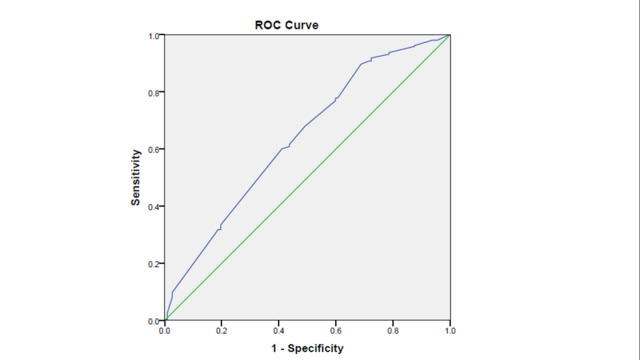
Objective Data on early‐onset twin‐to‐twin transfusion syndrome (TTTS) are scarce and, therefore, evidence‐based counseling and management of these pregnancies are challenging. This study aimed to investigate survival rates and establish predictors of survival after fetoscopic laser surgery (FLS) for early‐onset TTTS. Methods This was an international multicenter retrospective cohort study of monochorionic diamniotic twin pregnancies complicated by TTTS diagnosed before 18 + 0 weeks' gestation that underwent FLS. The primary outcome was dual‐twin survival at 28 days after birth. Secondary outcomes included survival of at least one twin and dual‐twin demise at 28 days after birth. Monoamniotic twin, triplet and higher‐order multiple pregnancies, pregnancies with chromosomal or structural fetal anomaly and TTTS cases not treated by FLS were excluded. Pre‐, intra‐ and postoperative characteristics were analyzed using multivariable logistic regression analysis. Discriminative performance was assessed using receiver‐operating‐characteristics‐curve analysis. Results A total of 485 cases of early‐onset TTTS that underwent FLS were included. The rates of dual‐twin survival and survival of at least one twin at 28 days after birth were 51.5% (250/485) and 76.7% (372/485), respectively, while 23.3% (113/485) of cases resulted in dual‐twin demise. Multivariable logistic regression analysis showed that absent or reversed end‐diastolic flow (AREDF) in the donor umbilical artery (adjusted odds ratio (aOR), 0.487 (95% CI, 0.273–0.867)) and absent or reversed a‐wave in the donor ductus venosus (aOR, 0.299 (95% CI, 0.110–0.810)) at the time of TTTS diagnosis were associated independently with decreased odds of dual survival, while higher gestational age at birth was associated with increased odds of both dual‐twin survival (aOR, 1.172 (95% CI, 1.117–1.229)) and survival of at least one twin (aOR, 2.053 (95% CI, 1.699–2.481)). The model for dual‐twin survival showed modest discriminative performance with poor overall fit. Conclusions The presence of AREDF in the donor umbilical artery and absent or reversed a‐wave in the donor ductus venosus, at the time of diagnosis of TTTS, and lower gestational age at birth were independent adverse predictors for dual‐twin survival following FLS in cases of TTTS diagnosed before 18 weeks. Future studies should explore the impact of surgical technique on survival rates.
| Item Type: | Article | ||||||
|---|---|---|---|---|---|---|---|
| Additional Information: | © 2026 The Author(s). Ultrasound in Obstetrics & Gynecology published by John Wiley & Sons Ltd on behalf of International Society of Ultrasound in Obstetrics and Gynecology. This is an open access article under the terms of the Creative Commons Attribution License (http://creativecommons.org/licenses/by/4.0/), which permits use, distribution and reproduction in any medium, provided the original work is properly cited. | ||||||
| Keywords: | MCDA, TTTS, early, intrauterine demise, laser, monochorionic diamniotic, survival, twin, twin‐to‐twin transfusion syndrome | ||||||
| SGUL Research Institute / Research Centre: | Academic Structure > Cardiovascular & Genomics Research Institute Academic Structure > Cardiovascular & Genomics Research Institute > Vascular Biology |
||||||
| Journal or Publication Title: | Ultrasound in Obstetrics & Gynecology | ||||||
| ISSN: | 0960-7692 | ||||||
| Language: | en | ||||||
| Media of Output: | Print-Electronic | ||||||
| Related URLs: | |||||||
| Publisher License: | Creative Commons: Attribution 4.0 | ||||||
| PubMed ID: | 41691618 | ||||||
| Dates: |
|
||||||
 |
Go to PubMed abstract | ||||||
| URI: | https://openaccess.sgul.ac.uk/id/eprint/118397 | ||||||
| Publisher's version: | https://doi.org/10.1002/uog.70178 |
Statistics
Actions (login required)
 |
Edit Item |