

Nolasco, GA;
Roldán, M;
Jamshidi, Y;
Georvasilis, I;
Rodríguez, RJ;
Boostani, R;
Shoeibi, A;
Armengol, L;
Codina, A;
Karimiani, EG;
et al.
Nolasco, GA; Roldán, M; Jamshidi, Y; Georvasilis, I; Rodríguez, RJ; Boostani, R; Shoeibi, A; Armengol, L; Codina, A; Karimiani, EG; Hernando‐Davalillo, C; Martorell, L; Ramírez Almaraz, ML; Muchart, J; Ortez, C; Nascimento, A; Urreizti, R; Natera‐de Benito, D; Serrano, M
(2026)
Expanding Hereditary Spastic Paraplegias Limits: Biallelic SPAST Variants in Cerebral Palsy Mimics.
Annals of Clinical and Translational Neurology, 13 (1).
pp. 108-121.
ISSN 2328-9503
https://doi.org/10.1002/acn3.70206
SGUL Authors: Jamshidi, Yalda
![[img]](https://openaccess.sgul.ac.uk/style/images/fileicons/application_pdf.png) |
PDF
Published Version
Available under License Creative Commons Attribution. Download (4MB) |
|
|
PDF (Figure S1)
Supporting information
Download (173kB) |
|
![[img]](https://openaccess.sgul.ac.uk/id/eprint/117957/2/acn370206-sup-0002-figures2.png)
|
Image (PNG) (Figure S2)
Supporting information
Download (144kB) | Preview |
|
|
PDF (Figure S3)
Supporting information
Download (168kB) |
|
|
PDF (Table S1)
Supporting information
Download (306kB) |
|
![[img]](https://openaccess.sgul.ac.uk/style/images/fileicons/application_zip.png) |
Archive (ZIP) (Appendix S1)
Supporting information
Download (137MB) |
Abstract
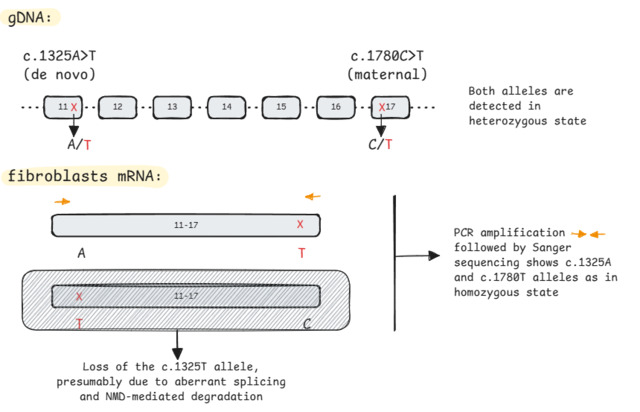
Objective Hereditary spastic paraplegias (HSP) are rare neurodegenerative disorders marked by spasticity and lower limb weakness. The most common type, SPG4, is usually autosomal dominant and caused by SPAST gene variants, typically presenting as pure HSP. We describe five individuals from three unrelated families who meet the clinical criteria for cerebral palsy and carry biallelic SPAST variants. We aim to increase the clinical and genetic understanding of SPAST‐related disorders and explore the underlying abnormal cellular mechanisms. Methods We performed comprehensive phenotyping and genetic analysis. In silico and functional studies were conducted using confocal microscopy on fibroblast cultures derived from carriers of the biallelic SPAST variants, a monoallelic SPAST variant, and a healthy control. Results Individuals exhibited early‐onset complex HSP with a diverse range of encephalopathy severity, spasticity, and neuronoaxonal involvement, occasionally leading to the diagnosis of cerebral palsy. Whole‐exome sequencing identified homozygous and compound heterozygous SPAST variants. Functional studies demonstrated reduced spastin and tubulin levels, mitochondrial fragmentation, and abnormal filopodia morphology in patient‐derived fibroblasts, supporting the pathogenicity of the variants. Interpretation We provide the first evidence of biallelic inheritance in SPAST‐related disorders, supported by functional analysis, expanding the clinical spectrum to include moderate‐to‐severe early‐onset encephalopathy. Our findings emphasize the importance of genetic diagnosis in cerebral palsy for prognosis, counseling, and personalized therapy. The identified variants reveal the genetic complexity of SPAST‐related disease and suggest a threshold effect of spastin levels in phenotypic variation. Cellular mechanisms such as mitochondrial dynamics and membrane morphology may contribute to pathogenesis and warrant further investigation.
| Item Type: | Article | ||||||||||||
|---|---|---|---|---|---|---|---|---|---|---|---|---|---|
| Additional Information: | © 2025 The Author(s). Annals of Clinical and Translational Neurology published by Wiley Periodicals LLC on behalf of American Neurological Association. This is an open access article under the terms of the Creative Commons Attribution License (http://creativecommons.org/licenses/by/4.0/), which permits use, distribution and reproduction in any medium, provided the original work is properly cited. | ||||||||||||
| Keywords: | SPAST, SPG4, cerebral palsy, hereditary spastic paraplegias, pediatric neurology | ||||||||||||
| SGUL Research Institute / Research Centre: | Academic Structure > Cardiovascular & Genomics Research Institute Academic Structure > Cardiovascular & Genomics Research Institute > Genomics |
||||||||||||
| Journal or Publication Title: | Annals of Clinical and Translational Neurology | ||||||||||||
| ISSN: | 2328-9503 | ||||||||||||
| Language: | en | ||||||||||||
| Media of Output: | Print-Electronic | ||||||||||||
| Related URLs: | |||||||||||||
| Publisher License: | Creative Commons: Attribution 4.0 | ||||||||||||
| Projects: |
|
||||||||||||
| PubMed ID: | 41000004 | ||||||||||||
| Dates: |
|
||||||||||||
 |
Go to PubMed abstract | ||||||||||||
| URI: | https://openaccess.sgul.ac.uk/id/eprint/117957 | ||||||||||||
| Publisher's version: | https://doi.org/10.1002/acn3.70206 |
Statistics
Actions (login required)
 |
Edit Item |